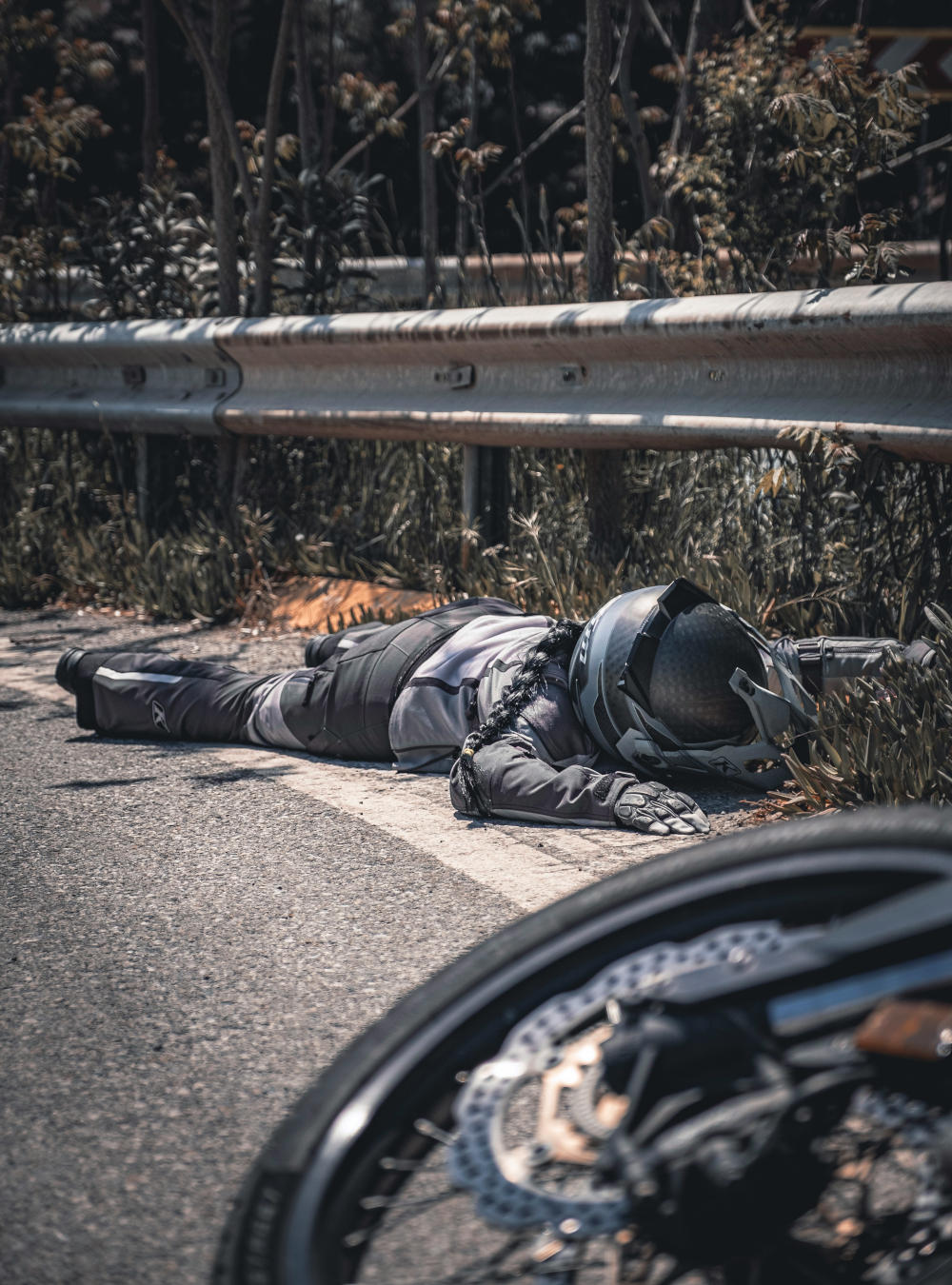
Motorcycle Accidents Attorney In Maryland
Types of Motorcycle Injuries in Maryland
Motorcyclists face a higher risk of serious injury because they lack the structural protection of passenger vehicles. Under Maryland personal injury law, victims may pursue compensation when another party’s negligence causes a crash.
Common Motorcycle Accident Injuries
1. Road Rash
Road rash occurs when a rider slides across pavement after impact. Severe cases can lead to infection, nerve damage, permanent scarring, and may require skin grafts. Injuries are classified similarly to burns, with third-degree road rash requiring immediate medical care.
2. Broken Bones
Fractures frequently involve the femur, tibia, forearms, pelvis, ribs, hands, and feet. Treatment may require surgical hardware, multiple procedures, and extensive physical therapy. Permanent mobility limitations are common.
3. Head and Traumatic Brain Injuries (TBI)
Head injuries are among the leading causes of death in motorcycle crashes. Injuries may include concussion, skull fractures, brain bleeding, swelling, seizures, paralysis, or permanent cognitive impairment.
Maryland law requires all riders to wear helmets. While helmets significantly reduce fatality risk, they do not prevent all brain injuries.
4. Spinal Cord Injuries
Spinal trauma can result in chronic pain, nerve damage, loss of mobility, quadriplegia, respiratory complications, and permanent disability. These injuries often require lifelong medical treatment.
5. Chest and Thoracic Injuries
Blunt-force trauma to the chest can cause:
- Broken ribs
- Collapsed or bruised lungs
- Internal bleeding
- Heart or vascular damage
Severe thoracic injuries may require emergency surgery and can be fatal.
6. Abdominal and Internal Organ Damage
Motorcycle crashes can damage the liver, spleen, kidneys, or other internal organs. Internal bleeding is especially dangerous because symptoms may not appear immediately. Signs include abdominal pain, dizziness, low blood pressure, and shock.
7. Upper Extremity Injuries (Arms and Hands)
Riders often brace during impact, leading to:
- Broken wrists, elbows, or fingers
- Shoulder injuries and torn rotator cuffs
- Nerve damage (including “Rider’s Arm”)
Some injuries may result in long-term loss of strength or function.
8. Neck and Facial Injuries
Motorcyclists may suffer:
- Whiplash
- Jaw, nose, or dental fractures
- Facial scarring or disfigurement
- Cervical spine damage
Serious neck injuries can involve spinal cord damage and paralysis.
9. Burns
Fuel spills or contact with hot engine components can cause severe burns requiring grafting and reconstructive procedures.
10. Soft Tissue and Muscle Injuries
Strains, ligament tears, and deep muscle trauma are common and may lead to chronic pain and reduced mobility.
Maryland Motorcyle Lawyers
Most Frequently Injured Body Regions
Motorcycle crashes most commonly affect:
- Legs and feet
- Arms and hands
- Chest
- Head
- Spine
- Abdomen
- Neck and face
Lower-extremity injuries are especially common and often result in long-term impairment.
Injury Prevention
While accidents cannot always be avoided, riders can reduce injury severity by:
- Wearing a DOT-approved helmet
- Using protective clothing (gloves, boots, reinforced gear)
- Riding within skill level
- Maintaining the motorcycle
- Obeying traffic laws
- Never riding under the influence
Most accidents occur because another driver fails to see the motorcycle or misjudges its speed and distance. Some of the most common causes include: Left turn collisions at intersections, where a driver turns in front of an oncoming motorcycle.
10 of the Most Common Motorcycle Accident Injuries
Because motorcycles aren’t enclosed vehicles, it’s no surprise that motorcycle accidents are generally far more injurious than other types of automobile crashes. Making matters worse, motorcycles are much lighter and smaller than other vehicles, meaning that they can be difficult for other drivers to spot on the road and more difficult to operate safely. Operating a motorcycle on the roads of San Antonio can be a dangerous venture.
We have compiled a list of ten of the most common motorcycle accident injuries, along with ways that these injuries can be prevented. If you’ve been in a motorcycle crash and are considering hiring a San Antonio motorcycle accident lawyer, read on to find out some of the injuries that qualify for a personal injury claim.
Common Bike Accident Injuries
Road rash. The most common form of motorcycle injury is road rash, which can range from minor to extremely severe. Road rash is a type of skin abrasion that occurs when riders are thrown from the bike and then skid on the pavement. Far from being a minor skin injury, severe road rash can cause serious complications such as infections or even nerve damage. Proper protective clothing leather is best should always be worn to reduce the type and severity of these abrasions in case of an accident.
. Broken or fractured bones. Another frequent injury sustained after motorcycle crashes are broken or fractured bones. Common fractures after motorcycle accidents include femurs, forearms, shins, and pelvis bones.
Foot and leg injuries. According to the CDC, 30% of non fatal motorcycle accident injuries happen to the rider’s legs and feet.
. Head and neck injuries. Studies have shown that larger motorcycle engine sizes come with a higher risk of head injuries. as our lawyers know all too well, head injuries are a sadly common occurrence among motorcycle accident victims, especially those who were not wearing a helmet. Head injuries caused by motorcycle crashes can cause brain damage, facial disfigurement, and even death.
. Spinal injuries. The thoracic spine is the most commonly damaged area of the spine in motorcycle accidents, but all of the spine is susceptible to injury in a high-speed crash. Whenever the spine is injured in a motorcycle accident, it is often the case that a permanent injury has been sustained. Spinal injuries can lead to chronic pain, nerve damage, paralysis, and even death
.Abdominal injuries. – Studies have shown that older riders have significantly higher incidences of thoracic chest injuries compared to their younger counterparts. Common types of abdominal motorcycle injuries include lung lacerations and rib fractures, but heart lacerations and other vascular injuries can also occur.
Road rash. The most common form of motorcycle injury is road rash, which can be minor to extremely severe. Road rash is a type of skin abrasion that occurs when riders are thrown from the bike and then skid on the pavement. Far from being a minor skin injury, severe road rash can cause serious complications such as infections or even nerve damage. Proper protective clothing leather is best should always be worn to reduce the type and severity of these abrasions in case of an accident.
Hand and arm injuries. Hand, wrist, and arm injuries are incredibly common among injured motorcyclists, because most people will throw their arms out instinctively when flung to the ground. Biker’s Arm also called Rider’s Arm is a common motorcycle injury that occurs when a motorcycle lands on its rider’s arm during an accident, resulting in nerve damage. In some cases, this type of injury can lead to paralysis of the arm. Specialized riding gloves and elbow pads can lessen the severity of these injuries and should be worn by riders at all times.
Burns. If the motorcycle’s gas tank spills during a wreck, a rider can end up with very severe burns. When such injuries occur, skin grafts often have to be performed, making burns one of the most serious types of motorcycle injuries.
Muscle Injuries. In more severe cases of road rash, muscle damage can occur – especially if the motorcyclist was not wearing protective clothing at the time of the accident. Back injuries sustained in a crash can also result in muscle soreness or injury.
Traumatic Brain Injuries . TBI is the leading cause of death among injured motorcyclists. Such injuries can also result in permanent paralysis. Wearing a helmet is the best line of defense against traumatic brain injuries, Riders who wear helmets are up to 35% less likely to die in the event of a crash.
Free Consultation with an Experienced Motorcycle Accident Attorney
If you’ve been injured or involved in a motorcycle crash in Maryland. our experienced attorneys serving the entire state can help you get your life back on track. Our motorcycle injury attorneys have years of experience with motorbike accident injury claims, and our team will work diligently to make sure your case is handled with the utmost care.
Unlike other types of attorneys, personal injury motorcycle accident attorneys have in depth knowledge of the types of injuries associated with motorcycle crashes, as well as manufacturer recalls, helmet laws, and traffic laws , all of which are crucial to these types of cases. Our lawyers have experience representing motorcycle accident victims all across TMaryland and our team of
knowledgeable Maryland motorcycle accident lawyers can help you get the compensation you deserve. Call us today for a free consultation with our Maryland bike accident attorneys .
Motorcycles are a popular way to travel for millions of people around the world. Unfortunately, traveling by motorcycle can be more dangerous than other modes of transportation due to a lack of protective barriers and safety features that automobiles have. Because motorcyclists are at a greater risk of being injured or killed if an accident occurs, it is important to understand the types of accidents that commonly occur, and how to avoid them.
Before hitting the road on your motorcycle, let’s take a look at 5 of the more common types of motorcycle accidents and what you can do to avoid them.
A gap between vehicles in traffic ahead of you.
Cars Turning Left
Cars making a left-hand turn can be particularly dangerous for motorcyclists. Whether you are moving through an intersection, passing a car, or traveling in an adjacent lane, if the driver of the car is not paying attention or cannot see you, a simple left-hand turn could be disastrous. It is estimated that 42 percent of all accidents involving a car and a motorcycle occur during a left-hand turn.
The key to avoiding this type of motorcycle accident is being aware. Keep an eye out for signs that a car nearby is about to make a left-hand turn. Look for indicators, such as:
A car waiting at an intersection in a turn lane, or partially in a turn lane.
Visible movements that may signal a sudden turn or direction change.
Lane Switching
Sudden lane switching, passing, or merging are another common cause of motorcycle accidents. When you are riding directly adjacent to a car, the driver may not be able to see you, making lane switching a greater risk. As you ride, you may not be able to tell if you are in a driver’s blind spot. So, what can you do to avoid lane switching accidents?
Look for signs that a car is about to switch lanes or merge, such as:
Turn signals turned on
Wheels are turned
The driver is visibly shifting or checking the mirrors
The driver visibly looks out t of the window checking blind spots
If you notice any of these signs, take caution and make sure your presence is known, or that you can safely maneuver out of harm’s way.
Head On Collision
Around 56 percent of motorcycle accident deaths are related to head on collisions between a motorcycle and an automobile. In most of these accident cases, both vehicles are traveling fast, and the motorcyclist is the one most injured or killed. The abrupt nature of head on collisions often results in the motorcyclist or passenger being ejected from the motorcycle causing serious injury or death.
To avoid head on collisions, motorcyclists should remember the Four R’s established by the National Safety Council. The Four Rs include:
Read the road ahead – Be aware!
Drive to the right – Driving to the right of cars or on the right side of the lane can help avoid close calls.
Ride off the road – If possible, if it looks like another vehicle is heading your way, slow down and merge to the shoulder of the road. Moving to the shoulder may seem dangerous, but it is far less likely that this maneuver will result in serious injury or death.
Reduce speed – If you notice another driver swerving, or the vehicle seems to be out of control, reduce your speed and stay out of the way.
Being observant and defensive while riding a motorcycle can help reduce the likelihood of being involved in a head on collision.
Lane Splitting
One of the more common types of motorcycle accidents that results from motorcyclist behavior is lane splitting. Lane splitting occurs when the motorcyclist drives between two lanes of traffic. This is most common in highly congested areas, or when traffic is at a standstill Rush hour on I 85 anyone? . There are several reasons why lane splitting is so dangerous, including:
Proximity of the motorcycle and other automobiles
Car drivers may not anticipate that someone will drive between lanes or pass between
stopped vehicles
Because cars cannot lane split, drivers often do not expect it
Reduced space in which to maneuver the motorcycle
One simple way of avoiding lane splitting accidents is to avoid lane splitting altogether. In most states, it is illegal to drive between lanes or between slowed or stopped vehicles.
Intoxication
Intoxicated driving will top most lists of the top causes of auto accidents regardless of the category. Alcohol plays a tremendous role in auto accidents of all types, with more than 30 percent of all accidents involving an intoxicated driver. In cases of motorcycle accidents involving only the motorcyclist, around 43 percent involved alcohol in 2014.
Motorcycling is a popular way to travel and network with other cyclists. There are many events across the U.S. where motorcyclists can enjoy activities, food, fellowship, and fun. Most of these events also include a hearty amount of alcohol consumption. These events, holiday weekends, and spring break are all prone to an increase in the number of alcohol related auto accidents.
The simple answer how to avoid this type of motorcycle accident is also simple. Do not operate a motorcycle after consuming alcohol or drugs. Even if you have only had a few drinks, you may not be able to tell just how intoxicated you are or are becoming. Instead of operating a motorcycle after drinking, plan ahead and make sure you have alternate transportation. Call a taxi, or use apps like Lyft or Uber to get where you need to go safely.
Have You Already Been Involved in a Motorcycle Accident?
If you have already been involved in a motorcycle accident and need help getting compensation for your injuries and losses, contact The Dixon Firm today to speak with an Atlanta motorcycle accident lawyer. Our team can help you understand your legal rights and determine if negligence, recklessness, or other wrongdoing led to your injuries.
Common Causes of Motorcycle Accidents in Maryland and H
ow to Protect Your Claim
Motorcycle crashes in Maryland can happen in an instant and often cause devastating injuries. Riders face unique risks on the road, from inattentive drivers to poorly maintained highways. When another motorist’s carelessness causes an accident, you have the right to seek compensation for your injuries and losses. The attorneys can help you understand your rights, preserve vital evidence, and pursue fair recovery for your damages.
How Do Motorcycle Accidents Happen in Maryland?
Motorcycles make up a small fraction of vehicles on the road, yet riders represent a disproportionate share of serious injury and fatal crash victims. Most accidents occur because another driver fails to see the motorcycle or misjudges its speed and distance. Some of the most
Lane changes without signaling, trapping or sideswiping a motorcyclist in the blind spot.
Speeding and tailgating, which leave little time for drivers to react when a motorcycle slows or stops.
Common causes include:
Left turn collisions at intersections, where a driver turns in front of an oncoming motorcycle.
Distracted or impaired driving, where a driver fails to focus on the road.
Poor road maintenance, such as potholes or loose gravel, which can throw a motorcycle off balance.
Every crash has its own story. Understanding how and why the collision occurred is the first step toward holding the responsible party accountable.
Proving Fault in a Motorcycle Accident
Maryland uses a contributory negligence rule, which means you cannot recover compensation if you are found even one percent at fault for your own injuries. That makes evidence critical in every motorcycle case. You and your attorney will want to collect:
Police crash reports that describe the scene.
Photographs of vehicle damage, skid marks, and roadway hazards.
Witness statements that confirm what happened.
Medical records linking your injuries directly to the collision.
Surveillance or dashcam footage, if available.
The sooner this information is gathered, the stronger your case will be. Insurance companies often try to shift blame to the rider, so having solid evidence can prevent unfair denials and delays.
Understanding the Role of Insurance
Many riders do not realize how complex insurance coverage can be after a crash. The at fault driver’s liability insurance is typically the first source of recovery, but some drivers carry only the minimum limits allowed by law. If your medical bills or lost wages exceed that amount, your own uninsured or underinsured motorist coverage can step in.
It is important to avoid giving recorded statements to insurers before speaking with an attorney. Adjusters may twist your words or suggest you were speeding or riding carelessly. A lawyer can handle these communications and ensure that your statements cannot be used against you later.
Injuries Commonly Seen in Motorcycle Accidents
Motorcycle riders lack the protection of seatbelts and airbags, so injuries tend to be severe. Common injuries include fractures, head trauma, spinal cord damage, road rash, and internal injuries. Even when protective gear like helmets and jackets are worn, the force of impact can lead to lasting complications and long recoveries.
Medical expenses can mount quickly, especially if long term therapy or surgery is required. A personal injury claim can help cover:
Lost income and reduced earning capacity
Emergency care and hospitalization
Ongoing treatment and rehabilitation
Pain, suffering, and emotional distress
Damage to the motorcycle and other property
Each case requires a detailed evaluation of both economic and non-economic damages.
How a Lawyer Can Help After a Motorcycle Crash
If settlement negotiations fail, your attorney can take the case to court. Having experienced legal representation can make a difference in whether you receive fair compensation or face costly setbacks.
If settlement negotiations fail, your attorney can take the case to court. Having experienced legal representation can make a difference in whether you receive fair compensation or face costly setbacks.
An attorney does more than file paperwork. A skilled lawyer investigates the scene, works with accident reconstruction experts, and negotiates directly with insurers to protect your rights. They can identify every possible source of compensation and prevent common mistakes that could jeopardize your case.
Staying Safe on Maryland Roads
While no rider can eliminate every risk, awareness helps reduce the chance of a crash. Always wear a helmet, follow posted speed limits, and maintain a safe distance from other vehicles. Keep an eye on weather conditions and avoid riding when visibility is poor. Most importantly, stay alert to the behavior of surrounding drivers. Defensive riding saves lives.
Speak With a Maryland Motorcycle Accident Attorney
If you or someone you love has been injured in a motorcycle accident, do not face the insurance companies alone. The team has decades of experience representing injured riders across Maryland. We understand the challenges motorcyclists face and are ready to fight for the compensation you deserve. Call us today for a free consultation and learn how we can help you move forward.
Negligence and Motorcycle Accident Cases
When you’ve been injured or lost a loved one, it’s possible that another party is to blame. Many things can go wrong on the road, and drivers are notorious for claiming that they didn’t see a motorcyclist. This is not an excuse for causing injury or death. Some of the most common causes of severe motorcycle accidents on Maryland’s roads include:
Unexpected left turns, sudden lane changes by other driver, tailgating, impaired driving, cutting corners too close, sudden stops, running a stop sign or red light, dangerous road conditions, such as poorly or unmarked construction zones, and defects in motorcycle parts or safety equipment.
If you believe that negligent, careless, or reckless action was the cause of your motorcycle accident, our legal team can help. We will carefully analyze every aspect of your crash, preserve evidence, and work with accident reconstruction experts when necessary to safeguard your interests.
We Fight for the Interests of Injured Motorcyclists
Our Maryland personal injury attorneys have been fighting for the rights of injured motorcyclists and their families for over two decades. We recognize that you have been through a traumatic experience and would probably wish to focus on your recovery instead of deal with insurance companies.
Having an experienced accident attorney advocating for your interests can help take some of the stress out of your current situation. Our services can also strengthen your case.
. We’ll make sure that the necessary paperwork is filed, and deadlines are met. Further, our team of investigators will analyze every factor of your accident to identify all potentially liable parties.
If you require ongoing medical care, home accommodations, or are losing time from work, we will ensure that you get the services you need. Our legal team will also use this information to determine the long term financial impact of the accident and create a demand for full and fair compensation.
If your accident was due to the negligence of another driver, poor road conditions, or a defective bike part, you have the right to claim compensation for such things as past and future medical expenses, lost wages, reduced future earning capacity, pain and suffering, and loss of enjoyment of life. If an insurer isn’t reasonable with their offer, we are always prepared to take your case to trial to obtain the most favorable result possible. Text Maryland Motorcycle Attorneys if you have any questions
Contact an Experienced Maryland Motorcycle Accident Attorney
We have represented hundreds of motorcycle accident victims, and have the experience, legal knowledge, and financial stability necessary to go to war with the at fault party’s insurance company.
Maryland Motorcycle Accidents Lawyers
Each time a motorcyclist climbs onto their bike and braves traffic, he or she takes a serious risk. Motorcycle riders are incredibly vulnerable to the unpredictable actions of other drivers as well as the harsh weather and road elements.
While not every motorcycle accident is caused by other drivers, many of them are, and those parties should be held accountable. If you or someone you love has been hurt in a motorcycle accident caused by another party’s negligence, you may be able to pursue legal action.
At our law firm, we represent injured motorcycle riders throughout Maryland. Our law firm understands the complexities of these cases as well as the bias that often exists against motorcyclists. We promise to fight for the full compensation you deserve. Contact us today for a free consultation. Remember! You get hurt. We get busy. Call Maryland Motorcycle Lawyers if you have any questions.
Understanding Maryland’s Motorcycle Laws
If you’re a motorcyclist in Maryland, it’s important that you understand the laws that apply to you, just as any driver has the same requirements. Some of the more pertinent laws in this state that apply to motorcyclists include:
There are no special licensing requirements for motorcyclists unless the rider is age 16 or younger, Maryland requires every motorcycle rider to wear a helmet, Motorcyclists in Maryland must also wear shoes.
If a person is riding as a passenger on a motorcycle, they must have their own seat and footrest, lane splitting is not permitted in Maryland, and only two motorcycles at a time can ride in a lane side by side.
<\Aside from these key laws, motorcyclists in this state must follow all of the other rules of the road.
Common Causes of Motorcycle Accidents in Maryland
Even though motorcycles get equal access to the road, they aren’t likely to come out ahead in a contest with a passenger vehicle or commercial truck. While motorcyclists can certainly cause accidents with reckless behavior, about half of all accidents are due to the negligence of other parties. Some of the most common causes of motorcycle crashes our firm sees include:
Aggressive driving,distracted driving, sudden stops, speeding, tailgating, unsafe lane changes, failure to yield the right of way,and left turns into the path of a motorcycle.
Types of Motorcycle Accident Injuries
According to recent data, Maryland ranks number ten on the list of most dangerous states for motorcyclists. The list was compiled based on fatality rates, but injuries can be just as alarming. In 2019 alone, there were over 1,200 injuries in motorcycle involved crashes in this state. Some of the most common types of motorcycle accident injuries our firm encounters include:
Head Injuries – Head injuries are the most common type of injury in motorcycle accidents.
Helmets can certainly help reduce the severity of these.
Road Rash. When a motorcyclist’s skin touches the roadway, it can lead to a serious laceration injury known as road rash.
Leg Injuries. Because they are exposed, leg injuries are common with bikers. Common leg injuries include fractures and broken bones.
Biker’s Arm. Biker’s arm happens when a motorcyclist throws their arm s out to stop a fall after being thrown from their bike. It can involve nerve damage, as well as broken and fractured bones.
Muscle Damage. Muscle damage is also quite common, including tears, rips, and the potential permanent loss of function.
Fatalities. Unlike with passenger vehicles, motorcyclists don’t have the protection of a vehicle frame. When an accident happens, the results are often fatal.
Liability in Maryland Motorcycle Accidents
In a motorcycle accident case, you have the right to pursue compensation if another party was responsible for the accident and your resulting injuries. Proving liability in these types of cases can be challenging. Some of the ways that our law firm can establish liability in these cases include:
Another Driver – Sadly, other drivers rarely notice motorcycles until it’s too late. A driver may have been distracted or driving recklessly, which is considered negligence.
A Pedestrian – Similar to drivers, a pedestrian can also act recklessly by stepping into the path of a moving motorcycle, causing them to lose control and crash.
Manufacturer’s Defect – A defective product can become a liability if it causes a driver or motorcyclist to lose control and get into an accident.
Poor Road Conditions – A city or contractor responsible for maintaining a road could cause a dangerous accident if they fail to maintain a road or clearly mark hazards.
It’s important to understand that Maryland is a contributory negligence state. If an insurance company can show that you were partially at fault in the accident, you won’t be able to recover anything in a personal injury case. A knowledgeable attorney can help you avoid this common pitfall.
What is a Fair Settlement for a Motorcycle Accident Injury?
Because every motorcycle accident case is different, it’s impossible to place a dollar figure on a case without a thorough review. And there’s generally no way to tell how much a case is worth just after the accident takes place. The financial compensation you receive depends on a variety of factors that are meant to make you whole from a financial perspective. You may also be entitled to some non economic damages that can add up to a significant figure.
Some of the factors that insurance companies, judges, and juries will use to place a value on your injury case include:
Your medical expenses, past and future. lost wages, including any lost future earning capacity, other expenses incurred due to the accident, pain and suffering, and emotional distress
Most personal injury cases are settled before they end up in court. Having a skilled personal injury lawyer in your corner that can negotiate on your behalf can be invaluable. But, if the insurance companies aren’t being reasonable, you also need an attorney that is willing to take your case to court.
Speak With an Experienced Motorcycle Accident Lawyer
After suffering serious injuries in a motorcycle accident due to another party’s negligence, you want a personal injury lawyer on your side that you can trust to safeguard your interests. Our experienced accident lawyers will thoroughly review your case and outline a strategy to pursue justice and help you move forward with your life. Our representation costs you nothing upfront because we don’t get paid unless you do.
Motorcycle Accident Attorneys Serving Maryland
We handle motorcycle accident cases on a contingency fee basis, which means you don’t pay unless we win.
Do I Need a Motorcycle Accident Attorney?
If you have been involved in a motorcycle accident, at the hands of a reckless or negligent driver, you will have a greater chance of recovering the compensation you seek if you hire a skilled motorcycle accident lawyer from our firm. Our lawyers are highly trained negotiators and litigators who are known for aggressively pursuing justice and fair compensation for all types of personal injury cases. Email Maryland Motorcycle Attorneys if you have any questions
There are many ways that motorcycle accident lawyers help crash victims recover after a serious injury, including:
.Determine Fault & Liability
Unfortunately, many juries, insurers, and legal professionals have inherent biases against bikers. Motorcycle accident lawyers understand how to confront those biases with facts that prove negligence on the part of negligent or reckless drivers. When determining fault and liability, a motorcycle accident attorney will conduct a thorough investigation; Gather witness testimonies;
Analyzing police reports, hiring accident reconstruction experts, and dealing with Insurance Companies
Recovering Compensation in Maryland
Motorcycle accident victims in Maryland may seek damages for:
- Medical expenses (past and future)
- Lost wages and loss of earning capacity
- Pain and suffering
- Permanent disability
Because Maryland follows strict contributory negligence rules, even minimal fault can bar recovery. Prompt investigation and experienced legal representation are critical to protecting a claim.
If you or a loved one has suffered serious motorcycle injuries, consulting a Maryland personal injury attorney as soon as possible helps preserve evidence and identify all liable parties.
Maryland Motorcyle Lawyers

